
For the Leaders & Members Who Built the Great Masterminds
You helped build the mastermind. It is time you could own one.
CXO Alliance is a member-owned collective for owners and operators — built to be the mastermind Napoleon Hill actually described. No guru. No stage. No pitch. A room of equals, and the leverage that only a true collective can create.
Reserve Your Seat — Informational Webinar →Free, live, and unhurried. The date is being finalized — register and you'll be first to receive it.
The CaseIf you have ever led a mastermind — or paid, in full and gladly, to sit inside one — read on. This was built for you.
There is a third door. The rest of this page is what's behind it.
A Short Piece of History
The word "mastermind" had two meanings. The industry chose the wrong one.
For three centuries, "mastermind" meant one person — a single dominating intellect. The brain at the front of the room.
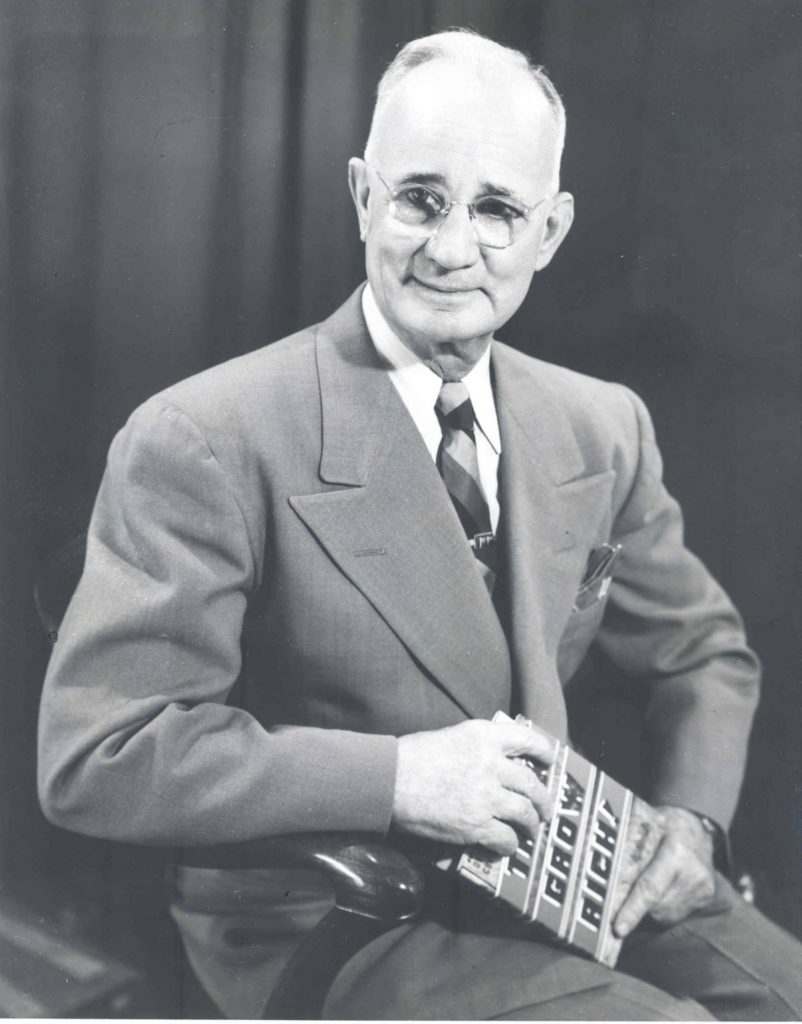
Then, in 1925, Napoleon Hill turned the word inside out. His "Master Mind" was not a person at all. It was what happens when ordinary minds — two or more, in genuine harmony, fixed on one definite purpose — combine into a third intelligence none of them owned alone.
Hill's whole point was this: the gifted individual at the front of the room is the wrong model. The room itself is the mind.
"No two minds ever come together without creating a third, invisible, intangible force."
— Napoleon Hill, 1937
Now look at what the mastermind became — and you will see the older meaning staring back.
The Reversal
Somewhere along the way, the mastermind became the very thing Hill rejected.
One personality. One name on the door. One larger-than-life figure at the front of the room — and a few hundred people who paid to face the stage.
Experts are flown in. But each one bought or earned that platform, and each speaks with an offer folded in a jacket. On a mastermind stage, everyone is selling something — and you can rarely tell what.
It is the pre-Hill definition, revived: one master mind, performing, and a room paying to watch.
It became a pitch-fest with a membership fee.
And none of it was the leader's fault. It was the structure — and the structure had one more flaw.
The Flaw Was Structural
The members build the mastermind. They simply never get to own it.
The leader builds the container and takes the early risk — and deserves to be paid well for it. But the value inside the room? The members bring that. The capital. The contacts. The referrals. The hard-won playbooks. The recruiting.
For a decade at a time, extraordinary people pour intellectual capital and reputation into a room — and walk away owning exactly none of what they built.
One person gets the equity. Everyone else gets a receipt.
Structure is the whole story here. So change the structure.

And Then the Math Changed
The mastermind sold scarcity. Knowledge isn't scarce anymore.
For thirty years, a great room held a near-monopoly on concentrated knowledge. You had to be there.
Now the frameworks, the AI systems, the playbooks — the very things people once paid five figures to glimpse — move at the speed of a shared link.
Gather four times a year; hope you are in the right hallway for the right nine minutes. A fine design when knowledge was scarce and slow. A poor one now.
The mastermind didn't fail. It succeeded so completely that the world it was built for stopped existing.
The answer was never a better mastermind. It was a different structure entirely.
The Shift
From a mastermind you attend — to a collective you own.
It is a collective. A co-op. The people in the room own it. Four things change at once.
You own a real stake.
Transferable units in the entity itself — not a membership that ends when you stop paying.
The books are open.
What the collective earns, spends, and pays — disclosed. See the incentives; trust the advice.
What the group learns, the group keeps.
Systems, playbooks, and AI agents pooled into a living library, shared by default.
The cost is shared, not sold.
Expertise hired once, on behalf of everyone — the economics of a co-owned asset, not a ticket.
Two of those four — shared attention, and shared cost — are far bigger than they sound. Here is the first.
The Engine
Four hours. One business. Every mind in the room.
We call it a One-Mind Session, and it is almost embarrassingly simple.
Four hours. One member's business on the table. Every other mind in the room — the operators, the facilitators, a bench of on-demand experts, and the AI systems running research in the background — turned entirely toward one definite purpose: get this member over this specific hurdle.
Not advice traded in a hallway. Not a panel. The coordinated intelligence of the whole room, aimed at a single business like a lens. Then the lens turns — next session, next member. Everyone gives their fullest attention because everyone, in turn, receives it.
It is Napoleon Hill's definition of a mastermind — written onto a calendar, and run on rotation.
Attention is one thing a collective can pool. Money is another — and the math there is even more lopsided.
Unmatched Leverage
Stop buying the same thing thirty times.
Picture thirty capable operators, in thirty separate rooms. Each needs the same thing this year — an agentic system to run marketing, internal communications, team updates, project management; the universal machinery every company needs, whatever it sells.
So each goes looking. Thirty searches for "the best vendor." Thirty sales calls. Thirty negotiations. Thirty $30,000 checks. Thirty learning curves — and, at the end, thirty solutions each a little bit wrong.
There is simply too much to learn, and too much overlap, for that to make sense any longer.
The collective does it once. We pool the budget. We find the single best expert in the world for the job — not the best any one of us could find alone; the best, full stop. We pay a premium for that person — $60,000, not $30,000 — and commission one solution, engineered from the first line to serve the whole collective. When it is finished, every member receives it. Built. Installed. Done.
30 × $30,000
thirty compromises.
1 × $60,000 ÷ collective
one masterpiece, owned by everyone.
One build. Best-in-world. The cost divided by the room. That is leverage no individual operator can manufacture — and it compounds. The collective decides what to build next, and builds that once too. And again.
One build, shared. One room, focused. Here is everything else a seat includes.
The Whole Difference, in One Table
Two rooms. One structural difference.
The mastermind you know
The collective
So what does a seat in that second room actually include?
What You're Joining
What a seat in the collective actually includes.
A genuine ownership stake.
Transferable units, a vote, and a share of what the collective becomes. An owner, not a customer.
The shared systems library.
The agentic systems the collective builds — and buys, once — deployable straight into your own business. You inherit running systems, not prompts.
Pooled expertise.
The best specialists in AI, automation, and marketing — retained by the collective, on behalf of everyone.
Industry pods.
Smaller rooms inside the room — healthcare, SaaS, e-commerce, professional services — where many of the One-Mind Sessions run.
The introduction engine.
A system that learns what each member is building and who they need — and surfaces the introductions only you are placed to make. Networking by design.
The room itself.
Operators at your altitude. Community, working sessions, warm introductions, support when a quarter goes sideways — owned by the members, not rented from a host.
Notice who is not anywhere in that list: a guru.

How It Is Run
A guru performs. A facilitator serves.
There is no one at the front of our room. The collective is run by facilitators — neutral, with nothing on a back table to sell — and by AI systems that carry the heavy, rote work no one should be paid by the hour to do.
Together they make it an incubator that sustains itself on what the members own, not on what a personality can sell from a stage.
The expert who joins your session is paid by the collective, not pitching to it. For the first time, when someone in the room gives you advice, you will know exactly why.
It is, in the end, why we are called what we are called.
The Name
Every C-suite title has an X in the middle. We made ours mean something.
The C and the O are already yours — chief executive, owner, operator. You have spent thirty years becoming the most capable individual mind you will ever be.
The X is the one thing that capability cannot manufacture alone: the X factor. Hill's third mind. The multiplier that appears only when capable people stop performing for a room and start thinking as one.
CXO Alliance exists to supply the X.
Is This You?
Built for twelve people. Not for everyone.
This is for you if —
- ✓You have led a mastermind, or spent real years and real money inside one — and you know exactly what was magic about it, and exactly what was missing.
- ✓You run a real business, or have built and sold one, and you can bring genuine value to a room of peers.
- ✓You will pledge time, talent, and treasure — not only a check. An owner contributes; a tenant consumes.
- ✓A current member would introduce you to their own family without a second thought.
This is not for you if —
- ×You want a cheaper mastermind. This is not built like one.
- ×You want to extract value without contributing it. The room will notice.
- ×You want a stage, an audience to sell to, or a platform for your own offer.
- ×You are not ready to think, vote, and carry responsibility like an owner.
If that is you — there is one room, and it is nearly built.
The Twelve
Twelve founding seats. Once.
The collective opens to a wider membership in time. The founding circle is twelve people — the founding owners, who capitalize the collective, shape its model while it is still soft enough to shape, and set the standard every member after them is measured against.
There is precedent. In 1976, twelve people put their own money into one idea: a company in which the people who did the work would own the company. They called it The Group. Those twelve became more than two hundred owners, and one of the most productive firms in their industry in the country.
1976
twelve founders, one idea
200+
owners it became
1
structure that outlasted them all
A word on the investment, because you will ask: it is real, it is specific, and it is not on this page. Genuine ownership is a legal instrument, not a marketing line — so it is discussed in person, once there is a clear fit. The founding twelve enter on terms — price, ownership, and influence — that no member after them will ever be offered.
Register for the Webinar →Before anyone applies, there is one conversation. Here is how to be in the room for it.
Before You Ask
The questions people in this world ask.
The Next Step
Come see the whole model. Bring your hardest questions.
Before anyone applies, there is a conversation. We are hosting one informational webinar — a live, unhurried walk through the collective: how the ownership works, how a One-Mind Session runs, how the shared builds get made, and what a founding seat involves. Then open Q&A. No pitch. There is nothing to high-pressure when there are only twelve seats.
The date is being finalized. Register now and you will be first to receive it — with the link and a calendar hold.
Free. Live. No replay-only funnel. Just the model, explained — and your questions, answered.